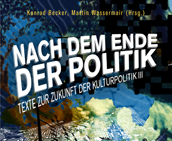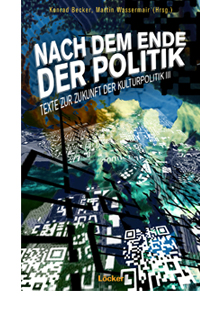
After the End of Politics
Konrad Becker, Martin Wassermair (eds.)
Löcker, Wien 2010 ISBN 978-3-85409-552-1With Franco Berardi Bifo, Jodi Dean, Branka Curcic/Zoran Pantelic, Jens Kastner, Thomas Macho, Gerald Raunig, Saskia Sassen, Klaus Schönberger, Christoph Spehr, Felix Stalder
Cultural politics are a category of public action that is slowly disappearing. In the light of inherently economist necessities culture is becoming a topic outside of the conflict of societal ideas. At the same time, the societal postulate of the right does include strategies regarding cultural policy. Culture as a "soft power" is increasingly becoming a stage for the competitive struggle of cities and regions, in which culture is art serves the added value of the catering sector and the services that tourism and the real estate sector have to offer. Culture is degenerating into a security paradigm, inscribing itself into racist discourses, and becoming a central leitmotif of repression and political persecution.
Regardless of the increasing complexity of cultural practices and forms of expression, an increasing appreciation becomes visible in geo-political analyses. Cultural factors do not only determine economic connections, but also global conflicts and urban disputes. The cognitive and media industries are gaining importance, and with them the cultural- technological expansion of symbol manipulation. In modern societies, the wielding of power predominantly works in opaque networks of conventions, rules, interpersonal relations, and internalized control. This is what makes a wide debate about culture as a constituent element of social relations and political communities difficult. Who are the actors in cultural politics?
The third volume of the series "Texts about Future Cultural Politics" examines the relation of political action and the cultural field and opens up new strategic perspectives.
Konrad Becker, Martin Wassermair
Jodi Dean
Post-Politik? Nein, danke!
Saskia Sassen
Informelles politisches Wissen in Netzwerken. Die Rolle der neuen Technologien
Konrad Becker
Parapolitik und zwingende Logik. Unsichtbare Ökonomien des Normativen
Branka Ćurčić & Zoran Pantelić
Kulturelle Kommodifizierung und ihre Folgen in der Neoliberalen "Nische"
Franco Berardi Bifo
Massenzynismus
Klaus Schönberger
Protest! Von der Koordination zum Projekt?
Gerald Raunig
Kunststreiks als Zeitgewinn. Für eine wilde Reterritorialisierung der Zeit
Martin Wassermair
Die Rückkehr der Flucht. Kulturpolitische Entwaffnungen einer Wagenburg
Felix Stalder
Teilen und Modifizieren. Neue Dimensionen von Solidarität
Jens Kastner
Nach dem Ende der Avantgarden. Vom "Spirit of '68" zum "neuen Geist des Kapitalismus"
Christoph Spehr
Für mehr bornierten Kultursozialismus! Vom Recht auf Stadt zum Recht auf Kunst
Thomas Macho
Hoffnung auf Kultur? Chancen und Risiken aktueller Bildungspolitik
Das Buch
Konrad Becker, Martin Wassermair (Hrsg.), Nach dem Ende der Politik. Texte zur Zukunft der Kulturpolitik III, Löcker Verlag (2011).
Eine Veröffentlichung des World-Information Institute
12,5 x 20,5 cm, Broschur, 192 Seiten
€ 19,80
ISBN 978-3-85409-552-1
Nach der Unumkehrbarkeit der Verhältnisse
Von Konrad Becker und Martin Wassermair
"Politik", schreibt Chantal Mouffe, Professorin für politische Theorie an der Universität von Westminster, "findet immer in einem von Antagonismen mehrfach durchkreuzten Feld statt." Was aber, wenn Politik im gesellschaftlichen Widerstreit nicht mehr auszumachen ist? Kulturpolitik etwa, der hier ein vorrangiges Interesse gilt, lässt sich kaum mehr identifizieren. Am Schauplatz eines Städte- und Regionenwettkampfs verschmelzen Kultur und Politik zunehmend zu einem Sicherheitsparadigma, schreiben sich in rassistische Diskurse ein und mutieren zu einem Leitmotiv von Repression und politischer Verfolgung. Wirtschaftliche Zusammenhänge, globale Konflikte und urbane Auseinandersetzungen sind längst von einer Kultur als "Soft Power" bestimmt. Die Bewusstseins- und Medienindustrie, und mit ihr die kulturtechnologische Erweiterung der Symbolmanipulation, gewinnen ungebrochen an Bedeutung. Jenseits traditioneller Formen politischer Strukturen erfolgt Machtausübung in modernen Gesellschaften vorwiegend über undurchschaubare Netzwerke von Konventionen, Regeln, interpersonellen Beziehungen und internalisierter Kontrolle.
Das macht eine breite Debatte über Kultur als konstitutives Element sozialer Beziehungen und politischer Gemeinschaften schwierig. Sie knüpft sich eng an die Frage: Wer sind die kulturpolitischen Akteurinnen und Akteure? Nach Kampfzonen in Kunst und Medien und Phantom Kulturstadt unternimmt der dritte Band in der Reihe der Texte zur Zukunft der Kulturpolitik den Versuch, politische Handlungsräume im kulturellen Feld zu untersuchen und damit auch strategische Perspektiven einer Diskussion zu unterziehen – wobei insbesondere dem Umstand Rechnung zu tragen ist, dass Kultur im Kontext der Veränderung des Politischen noch nicht ausreichend Beachtung gefunden hat.
Die Organisation der Gemeinwesen wird bis heute von längst vergangen geglaubten Gespenstern heimgesucht. Kulturelle Artefakte dominieren die öffentliche Wahrnehmung. Noch im späten Mittelalter repräsentierte die Krone das gesamte Staatswesen in einem Corpus Mysticum. Die durch wissenschaftliche Jurisprudenz rationalisierte Säkularisierung eines Königtums von Gottes Gnaden hat sich in ein rechtliches Konzept verdichtet, das bis heute erhalten geblieben ist. Im Übergang von mittelalterlichen Auffassungen zu einer modernen politischen Staatsraison blieb die mystische Körperschaft erhalten, die nunmehr durch eine spezifische Rationalität organisiert werden muss. Noch immer bestimmt etwa das angelsächsische Unternehmensrecht auf außergewöhnliche Weise die gesellschaftlichen Machtverhältnisse. Nicht von ungefähr bezog sich auch Margarete Thatcher indirekt auf Kulturpolitik, als sie zum Ausdruck brachte: "Ökonomie ist nur die Methode, das Ziel ist die Veränderung der Seele."
Mittlerweile hat sich die Form der politischen Kultur deutlich modifiziert. Das so genannte New Public Management ist unter einem Effizienzvorwand nach kaufmännischen Grundsätzen modelliert. Neoliberale Ideologien fordern, dass staatliche Aufgaben an private Unternehmen zu übertragen sind. Sie argumentieren wider besseres Wissen. Öffentliche Verwaltung lässt sich dadurch ebenso wenig verbessern, wie durch die angeblich höhere Effizienz Kosten zu senken sind. Denn wer nicht zur öffentlichen Rechenschaft verpflichtet ist, kommt der Gesellschaft meist sehr teuer zu stehen. Wenn Firmen und so genannte Quangos (quasi non-governmental organisations) weitgehend unkontrolliert und in Bereichen mit Hochtechnologie sowie hohen Gewinnspannen Staatsangelegenheiten verwalten und die Beziehung zwischen dem Öffentlichen und dem Privaten organisieren, ist Gefahr im Verzug. Aggressive Formen der Netzwerkorganisation zur Beeinflussung und Steuerung des Zusammenfalls von Interessen liegen weit außerhalb der Reichweite der Rechtsinstrumente. Unter dem Radar der öffentlichen Wahrnehmung interagieren Netzwerke in flexiblen Rollen innerhalb und außerhalb der Regierungen, um gemeinsame Ziele zu verfolgen. Mit der Transformation der Governance und des Gemeinwesens werden Grenzen zwischen Markt- und öffentlicher Sphäre aufgeweicht, Informationen privatisiert und Bürokratie personalisiert. Öffentliche Kontrolle erweist sich mittlerweile als unzureichend, um den Manövern einer professionellen Meinungsindustrie, den Methoden der zeitgenössischen Meinungsforschung und dem Management der Vorlieben Einhalt zu gebieten. Neue politische Netzwerke sind – im Gegensatz zu traditionellen Interessengruppen – nicht durch Grenzen definiert, sondern kreisen in unsichtbaren Allianzen um Gravitationszentren. Ein Schwarm erzeugt den Eindruck von Reichweite und Wirkung, die Expertise präsentiert sich einem Publikum, das über die Hintergründe der privaten Interessen und Profite mit der veröffentlichten Meinung nicht ausreichend im Bilde ist. Schlechte Argumente und fehlende Beweise sind zum Standard-Protokoll einer öffentlichen Diskussion geworden, in der Gewissheit bestenfalls zu einer rhetorischen Formel der Erschließung emotionaler Energien verkommen ist.
Am postmodernen Glatteis fehlt die Reibung der parrhesia – des Sprechens gegen den Strom. Widerspruch ist ein Risiko und exponiert. Kollektives Handeln hängt aber von geteiltem Wissen ab, als Wirkung der direkten Kommunikation. In diesem Sinne sind im vorliegenden Buch unterschiedliche Beiträge anzutreffen, die dieses Risiko nicht scheuen. Nach dem Ende der Politik gliedert sich in drei Blöcke, die den sehr heterogenen thematischen Zugang wie eine sanft verbindliche Klammer umfassen.
In Post-Politik macht Jodi Dean mit einer Forderung nach Re-Politisierung den Auftakt. Sie sieht im Neuerfinden des Träumens eine wesentliche Aufgabe emanzipatorischer Bewegungen und stemmt sich damit gegen eine Individualisierung der Politik in Lifestyles, in der der "Feind", wie etwa das neoliberale Paradigma, inzwischen die gleiche Sprache spricht, während die Linke in psychotischer Politik gefangen ist, die sie der Fähigkeit beraubt zu artikulieren, was sie eigentlich politisch will.
Saskia Sassen untersucht anschließend die Rolle der neuen Technologien anhand einer Gegenüberstellung von elektronischen Finanzmärkten und politischem Aktivismus. Die Hochfinanz verwendet das distributive Potenzial der digitalen Wissensverwertung genauso wie Organisationen der Zivilgesellschaft, die Demokratie und Partizipation durchsetzen wollen. Sie unternimmt damit den Nachweis, dass – egal, ob es sich um offene oder geschlossene Netzwerke handelt – die Multiplikationseffekte der neuen Technologien sowohl zur Demokratisierung als auch für eine stärkere Konzentration der Macht verwendet werden können.
Konrad Becker beleuchtet zum Abschluss des ersten Blocks die unsichtbaren Ökonomien des Normativen. In einer Welt des immateriellen Zwangs ist die Instrumentalisierung von Subjektivität nicht nur das neue Businessmodel der Wirtschaft, sondern auch Mittel der politischen Gestaltung. Während Sachpolitik von einem Schatz alter und neuer Mythen besessen scheint, liegt gesellschaftliche Steuerung zunehmend im Terrain der Imagination. Aus diesem Grunde muss ihr, so Beckers Postulat, die Autonomie der Vorstellungskraft entgegengesetzt werden, eine konkrete politische Praxis der Utopie.
Zu Beginn des Themenblocks Politische Kultur behandeln Branka Curcic und Zoran Pantelic Hierarchien von Zentrum und Peripherie in globalen Kulturökonomien. Sie konstatieren eine Erosion der Staatsgewalt auf nationalstaatlicher Ebene und in wirtschaftlichem Sinne, meistens durch Prozesse der Privatisierung und generell durch die Deregulierung der Märkte in der transnationalen Zirkulation von Kapital. Anhand konkreter Beispiele in der Stadt Novi Sad beschreiben sie Mechanismen der Verwandlung der kulturellen Domäne in eine wichtige neue Nische für Kapitalakkumulation. Das hat zur Folge, dass nicht nur die kulturelle Sphäre wirtschaftlichen Parametern unterworfen ist. Auch Mechanismen des sozialen Zusammenhalts werden gegen neue marktwirtschaftliche Abhängigkeitsbeziehungen ausgetauscht.
Daraufhin untersucht Franco Berardi Bifo das Phänomen des Zynismus in postmodernen Gesellschaften, der durch konformistische Unterwerfung und Anbiederung an die Mächtigen gekennzeichnet ist. Während die historischen "Kyniker" die stille Duldung des Rechts der Mächtigen entschieden ablehnten, stellen in unserer Zeit die Zynikerinnen und Zyniker die konformistische Mehrheit. Bifo führt den zeitgenössischen Massenzynismus sowohl auf das Versagen utopischer Ideologien des letzten Jahrhunderts als auch auf die Wahrnehmung einer endgültigen Unumkehrbarkeit der Verhältnisse zurück. Alternativen sieht er nicht in der Leidenschaft, sondern in der Ironie und betont deren Gegensätzlichkeit.
Klaus Schönberger widmet sich in weiterer Folge dem Wandel von Vergesellschaftung und Assoziierung in sozialen Bewegungen. Er versucht, Möglichkeiten einer selbstbestimmten Organisierung sowie antagonistischer Positionen im kognitiven Kapitalismus auszuloten. Damit verbindet Schönberger nicht nur die Frage nach Formen einer Artikulation von Protest, die den sich wandelnden gesellschaftlichen Bedingungen angemessenen ist, sondern auch die Frage nach dem veränderten Charakter des Politischen.
Am Ende des zweiten Blocks plädiert Gerald Raunig für eine Re-Territorialisierung der Zeit. Die Vermachtung der Zeit betraf schon im 19. Jahrhundert nicht nur die Arbeitszeit, sondern neigte zur totalen Inwertsetzung der Existenz. Aber erst in post-fordistischen Regimes ermöglicht der totale Zugriff auf die Zeit und ihre vielen Territorien eine schier unendliche Quelle der Verwertung. Hier gilt es, immer neue adäquate Formen der Unterbrechung des Zeitregimes zu finden – sowohl auf der Ebene des Ereignisses, des temporären Bruchs der glatten Zeit, als auch auf der Ebene der Dauer.
Kulturelle Politik, der dritte Block, wird von Martin Wassermair eröffnet. Er nähert sich der Politik wie einer Bühne, die eine folgenschwere Entblößung zur Aufführung bringt. Die Entrechtlichung von Menschen, die vor Hunger, Krieg und Vertreibung Zuflucht suchen, macht deutlich, dass mit dem nackten Leben auch die Kulturpolitik zwischen die Mühlsteine von Polizei- und Biomacht geraten ist. Wassermair fordert eine radikale Umkehr, die Rückkehr der Flucht und damit die Entwaffnung einer Wagenburg, die die Logik des Krieges in vielen Bereichen von Politik und Gesellschaft verinnerlicht.
Felix Stalder befasst sich im darauf folgenden Beitrag mit neuen Dimensionen von Solidarität bei gleichzeitiger Individualisierung und Entsolidarisierung. Diese gesamtgesellschaftlichen Entwicklungen zeigen sich in der Privatisierung von Kultur. Gleichzeitig beobachtet er eine gegenläufige Tendenz, die von einer zunehmenden Digitalisierung und Vernetzung der Lebenswelten getragen und in hohem Maße medial geprägt ist. Damit verändert sich auch die Verfasstheit von Kultur und Sinnerzeugung. Der Widerspruch von Produktivkraft und Eigentumsform bricht insbesondere dort auf, wo die neuen Technologien intensiv zum Einsatz kommen und die Wertschöpfung besonders hoch sein kann. Der Begriff der Commons oder Gemeingüter erlaubt eine Brücke zwischen sehr alten und sehr neuen Formen der gemeinschaftlichen Organisation, zwischen materiellen und immateriellen Ressourcen, weshalb, so Stalders Plädoyer an die Kulturpolitik, Kultur und Bildung als kollektive Ressource verwirklicht werden müssen.
Anschließend erzählt Jens Kastner über die "Neue Bourgeoisie" zwischen Selbstverwirklichung und Selbstprekarisierung sowie über die normativen Zwänge in der Kulturproduktion des postfordistischen Zeitalters. Was als "Spirit of Rebellion" gesprungen ist, sei als der "neue Geist des Kapitalismus" gelandet. Aber auch die schärfste Kritik an gegenwärtigen Wissens- und Praxisformen muss die Selbstvergewisserung in sozial- und geisteswissenschaftlichen Tätigkeiten anerkennen, die sich in dem Willen zur Veränderung der Gesellschaft konstituiert. Demnach haben nicht nur neoliberale Think Tanks oder der militärisch-industrielle Komplex Relevanz für die allgemeine gesellschaftliche Transformation, sondern sehr wohl auch, so Kastners Überzeugung, bestimmte intellektuelle und kulturelle Milieus.
Am Beispiel Hamburger Kunstschaffender und Intellektueller, die sich der Vereinnahmung durch Kreativwirtschaftsideologie und Städtemarketing widersetzen, tritt Christoph Spehr in seinem Text nachdrücklich für "mehr bornierten Kultursozialismus" ein. Er stellt dem schier übermächtigen Kapitalismus eine Bewegung gegenüber, die neue urbane Utopien, etwa von Städten, die keine Ware sind, sichtbar machen. Im Gegensatz zur Pseudo-Romantik der illegalen Aneignung und der prekären Existenz fordert Spehr ein legistisch abgesichertes Recht auf Kunst und ein ebensolches Recht auf Stadt. Dann wird es eines Tages, so seine These, zur neuen Dynamik der sozialen Kämpfe, dass sie nicht mehr nur Korrektur und Ergänzung, sondern das Soziale und Öffentliche direkt spielen.
Im letzten Beitrag des Buches äußert sich Thomas Macho skeptisch zum Zauberwort von der Kultur als Resthoffnung nach dem Bankrott der großen Hoffnungen. Er fragt, ob Kultur sich auf Zukunft reimt und sieht zeitgenössische Kulturpolitik in sozial- und beschäftigungspolitischen Argumenten, identitätspolitischen Strategien, ökonomischen und technologischen Zwängen gefangen. Mit der Einsicht, dass Kultur nicht nur als Propagandistin technischer Fortschritte gefördert werden müsste, sondern auch als deren kritische Reflexionsinstanz, identifiziert Macho zeitgemäße Kunst als intellektuelle Arbeit und fordert mit Cioran einen neuen Typus technisch-reflexiver Intelligenz: "Die Moderne par excellence ist durch das Auftreten des intelligenten Künstlers gekennzeichnet." Ein Schlüssel liegt in der Bildungspolitik, die versuchen muss, experimentelle Strukturen zu fördern. Autonomie ist nicht vordergründig in Verwaltung und Interessenvertretung zu etablieren, sondern in der Gestaltung neuer Organisationsformen von Wissenschaft und Kunst.